click here to view full article in Ireland’s Home Interiors & Living Magazine
EDITORIAL BY EMMA DEIGHAN. PHOTOGRAPHY BY PHILIP LAUTERBACH. Philip Lauterbach
A House Guided by Instinct
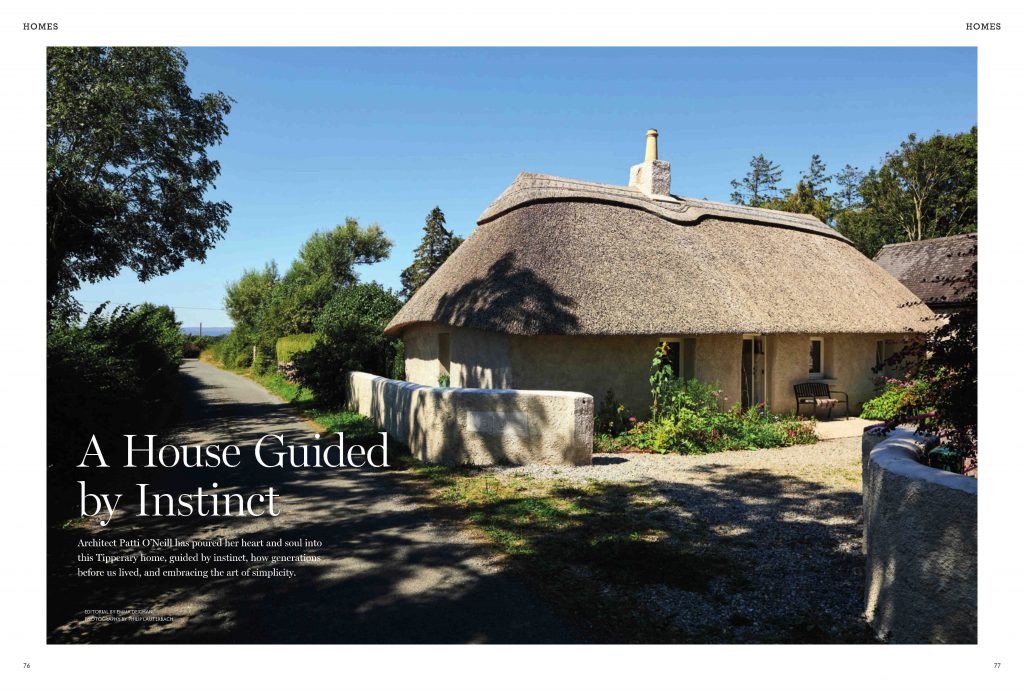
Architect Patti O’Neill has poured her heart and soul into this Tipperary home, guided by instinct, how generations before us lived, and embracing the art of simplicity.
Talking to Patti O’Neill about her eight-year renovation of this beautiful thatched cottage and recent extension is both fascinating and enlightening. Her decisions are guided by a philosophy that less is more, but also by a deep belief in the connection between the body and the home.
‘It’s transformed my life. But in a way it’s something I always wanted. As a child I longed for the idea of a home that makes you feel secure. That’s the ultimate thing,’ she begins.
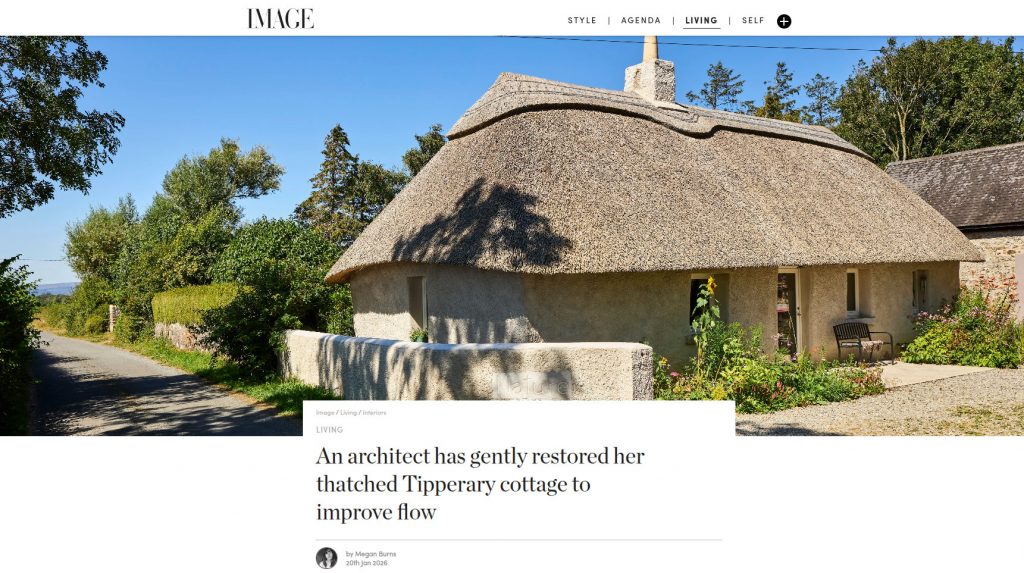
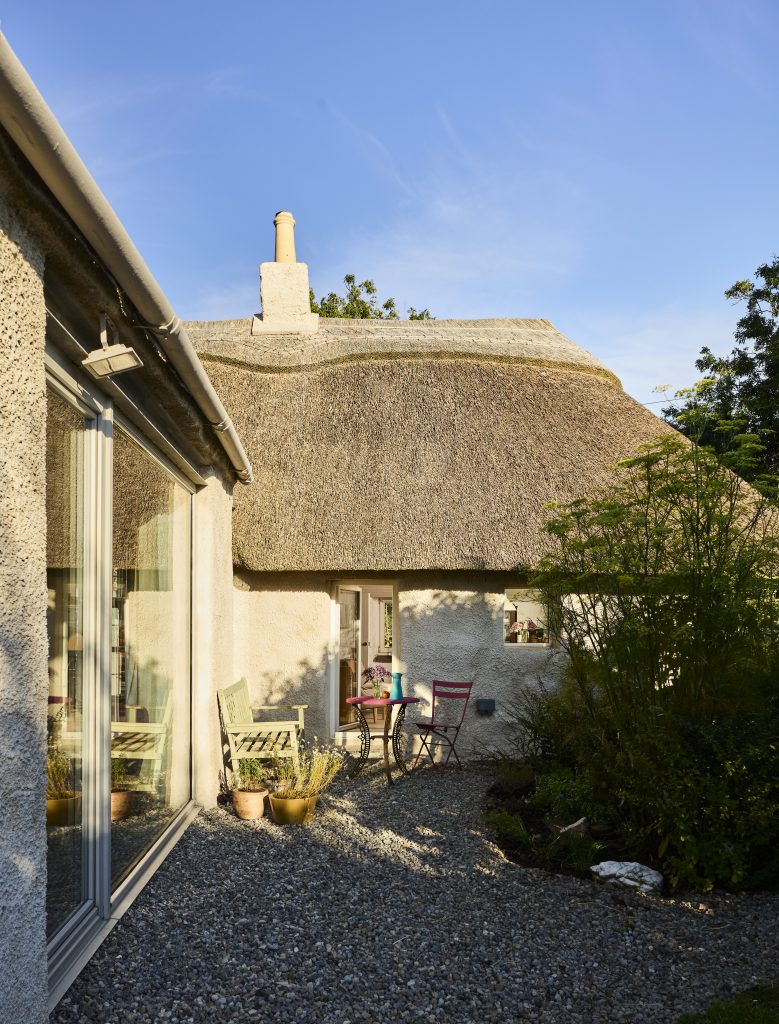
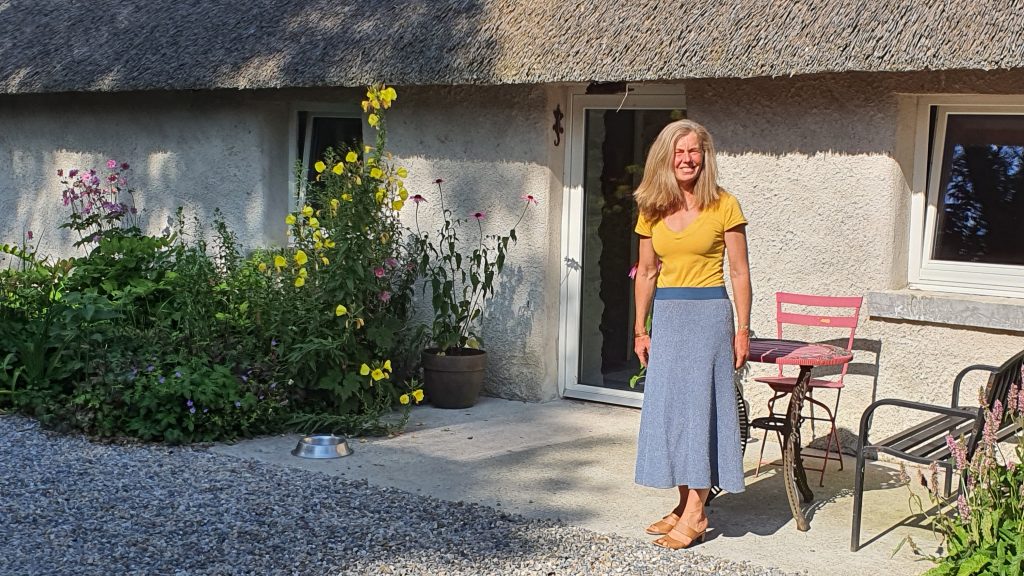
Surrounded by an overgrown garden filled with apple trees, the cottage is modest in scale but rich in character. Parts of the building date back to the early 1800s, something Patti identified through the thickness of the stone walls and historic maps. ‘The thatched part is early 1800s,’ she explains. ‘You can tell from the wall thickness and the fact it appears on the 1840s map. The loft building came later and the walls are about a foot and a half thick. When I was renovating I found letters that were probably from the 1870s.’ When she first bought the property it appeared far more complete than it really was. ‘It was deceptive when I bought it. It looked finished but it was full of cement. From a previous project I knew that’s often not what it looks like. I got a feel for it straight away and knew there was a lot of work involved.’ Patti approached the project with a strong determination not to live beyond her means using time and patience as her budget. ‘But you have to be flexible and accept that the house won’t be finished all at once,’ she warns. The renovation began slowly, room by room. ‘I moved in when I had just one room completed,’ she says. ‘That first phase took about a year and a half.’
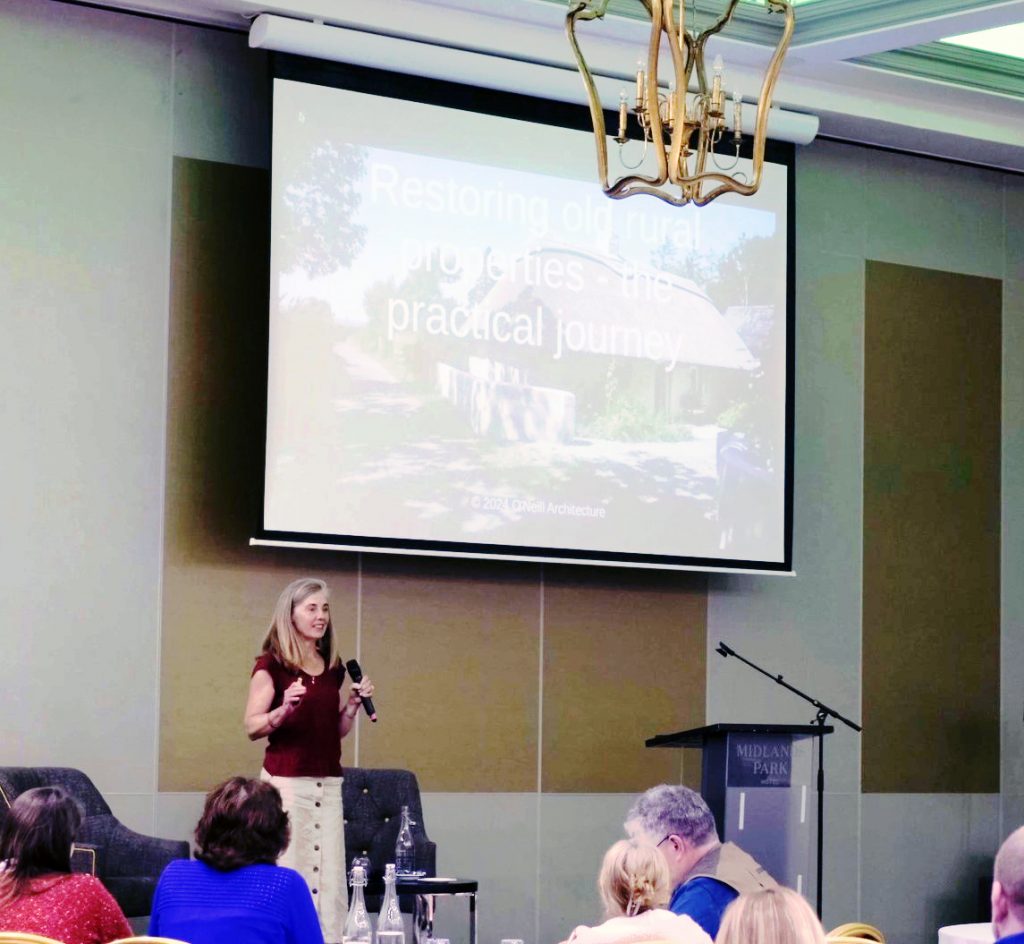
Patti believes there are two types of homeowners. ‘There are people who want everything finished before they move in, and there are people who move in and develop the house over time. I think the second way is easier because you grow with the building.’ Today Patti works as an architect specialising in cottages and traditional buildings through her practice, O’Neill Architecture. Many clients come to her seeking advice on restoring old homes. ‘They want something that feels authentic and natural,’ she continues.
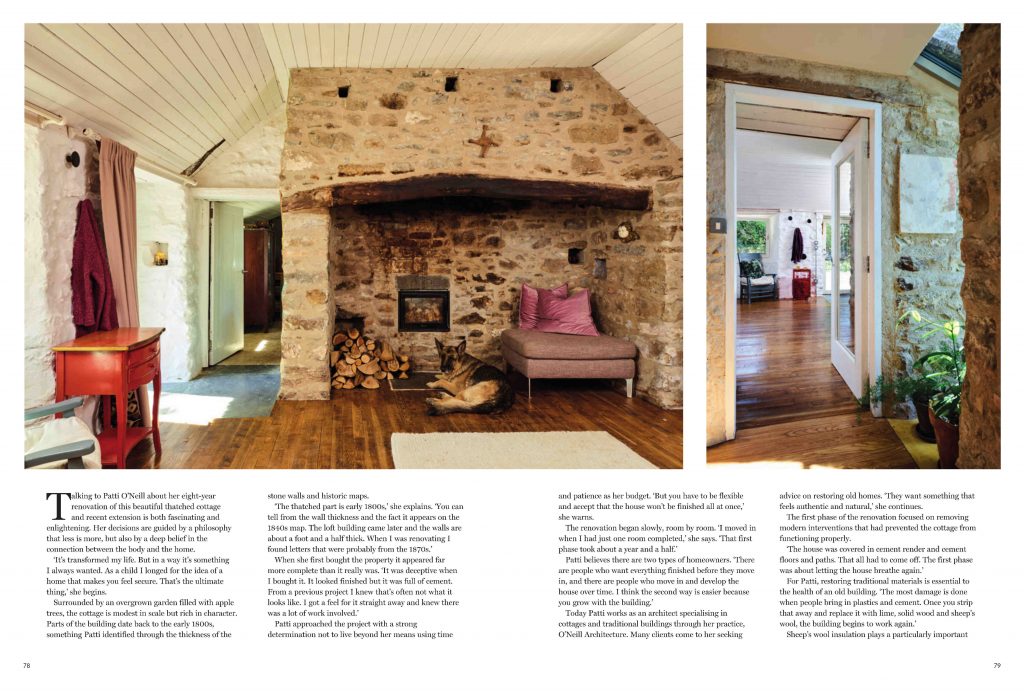
The first phase of the renovation focused on removing modern interventions that had prevented the cottage from functioning properly. ‘The house was covered in cement render and cement floors and paths. That all had to come off. The first phase was about letting the house breathe again.’ For Patti, restoring traditional materials is essential to the health of an old building. ‘The most damage is done when people bring in plastics and cement. Once you strip that away and replace it with lime, solid wood and sheep’s wool, the building begins to work again.’ Sheep’s wool insulation plays a particularly important role throughout the house. ‘It works as a humidity regulator because it’s hygroscopic. Each little curl of the hair holds the dew. Sheep don’t get wet because the wool holds moisture. When you visualise that, it’s acting like a sponge in your house.’ Beyond insulation, Patti believes the body itself can guide decisions about materials. ‘I always say use the body as a barometer. Sheep’s wool soaks up toxins and it insulates, but it’s also completely natural. You could sleep on it if you wanted. If something feels right for the body, it’s probably right for the house.’
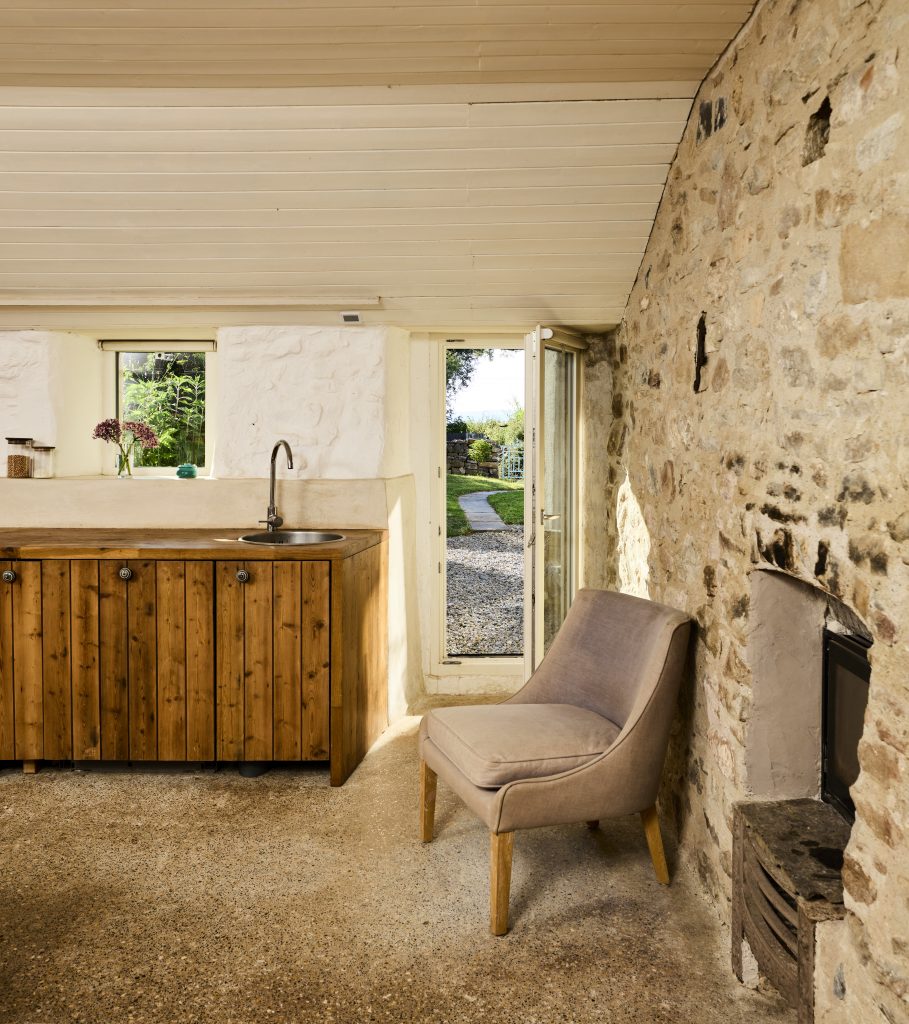
After living in the cottage for a number of years, Patti realised the layout needed to evolve. ‘The flow of the house didn’t feel right,’ she says. ‘The front and back door didn’t connect properly and things felt dislocated.’ The kitchen was also moved. The second phase of renovation focused on correcting that flow. ‘I moved the back door so that every time I open it I see the lake. That one move completely changed the experience of living in the house.’ For Patti, architectural decisions are deeply connected to how spaces feel emotionally. ‘The way we’re taught in architecture is very technical. It’s all about services management and placing things efficiently. But I often disagree with that approach. For example I don’t believe toilets should sit beside kitchens.’ Instead Patti focuses on how spaces welcome people. ‘I walk through the door and think about how it feels. Maybe there’s a sofa and a small table with flowers. Suddenly you feel like you’ve come home.’
She believes traditional buildings were often planned with a deeper understanding of environment and human behaviour. ‘In the old way houses weren’t simply facing the road. They were positioned for shelter, for the landscape and for how energy enters the house. They were very intuitive.’ The living room, anchored by a large stone fireplace, is the heart of the cottage. ‘When we removed the cement around the fireplace we discovered this beautiful hearth surround underneath. It was magical to see.’ To restore the proportions of the room, Patti installed a salvaged timber partition with a concealed door. ‘It divided the space back to its original proportions and made it snug again.’ The room continues to evolve with how Patti lives in it. ‘I now have two timber boxes with a small mattress on them and in winter I live there. It’s like a little cave.’
Throughout the entire renovation Patti was accompanied by her late German Shepherd, Ida . ‘She was my very much loved companion throughout the whole journey of creating this home,’ Patti says. ‘She even came with me to consultations.’
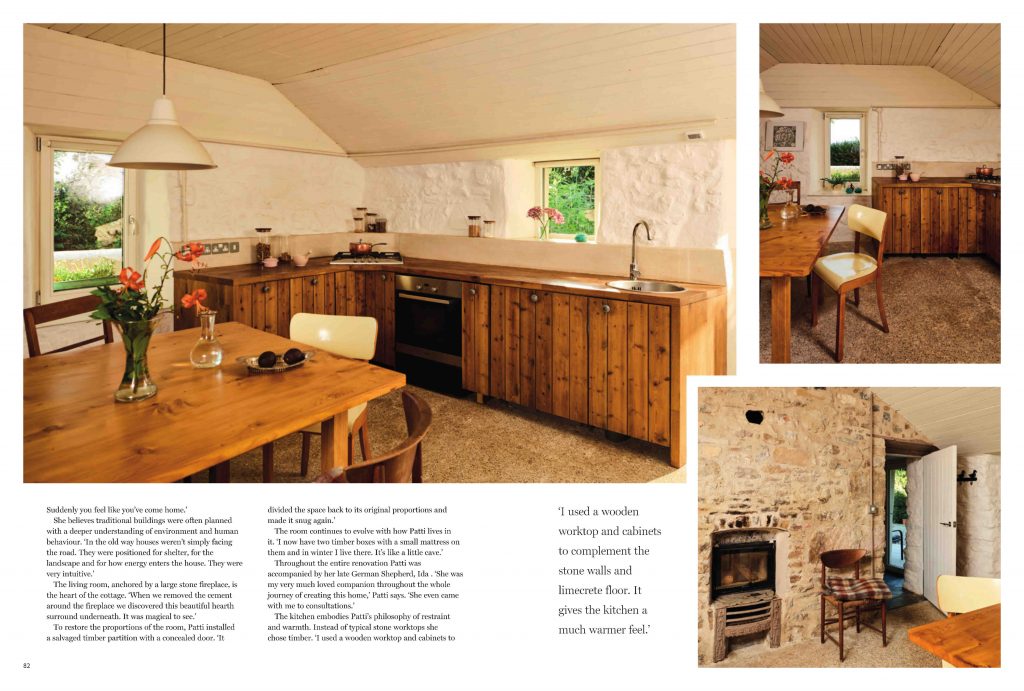
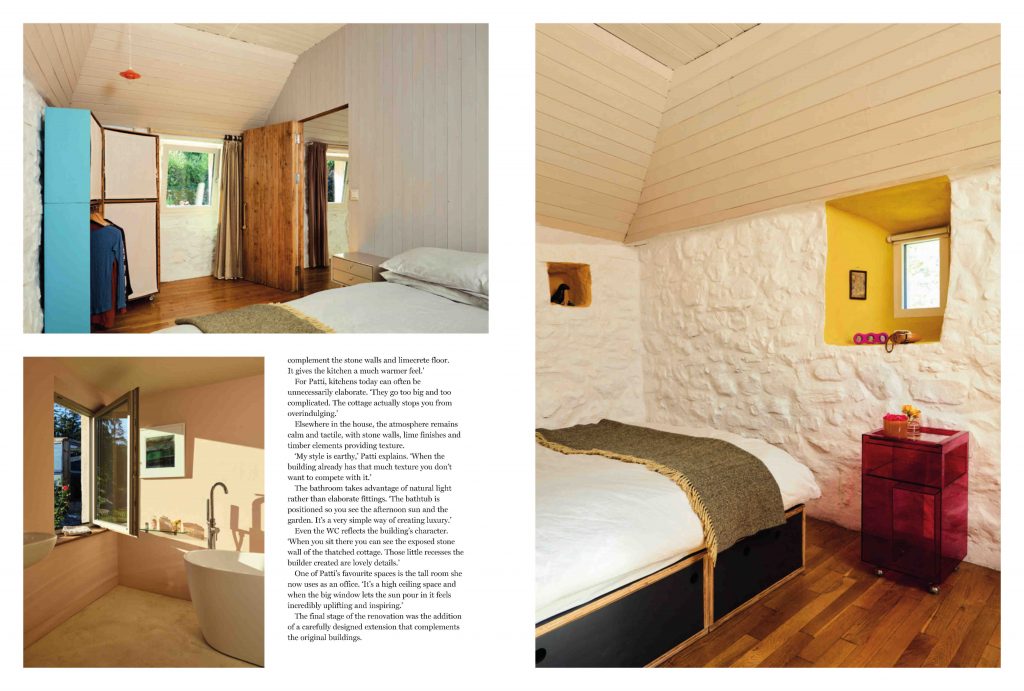
The kitchen embodies Patti’s philosophy of restraint and warmth. Instead of typical stone worktops she chose timber. ‘I used a wooden worktop and cabinets to complement the stone walls and limecrete floor. It gives the kitchen a much warmer feel.’ For Patti, kitchens today can often be unnecessarily elaborate. ‘They go too big and too complicated. The cottage actually stops you from overindulging.’
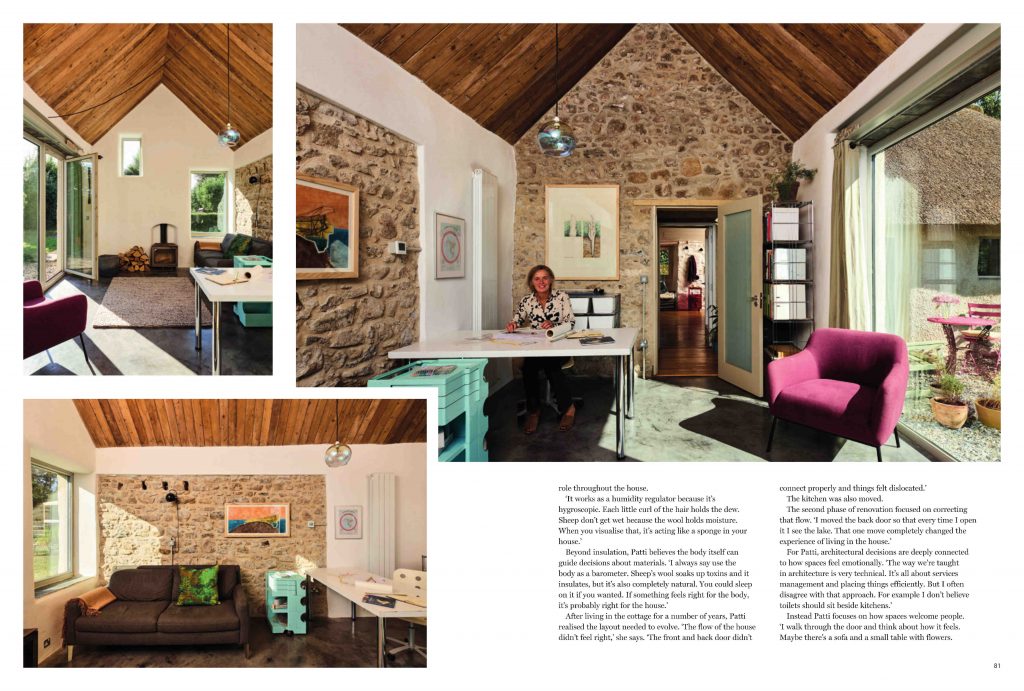
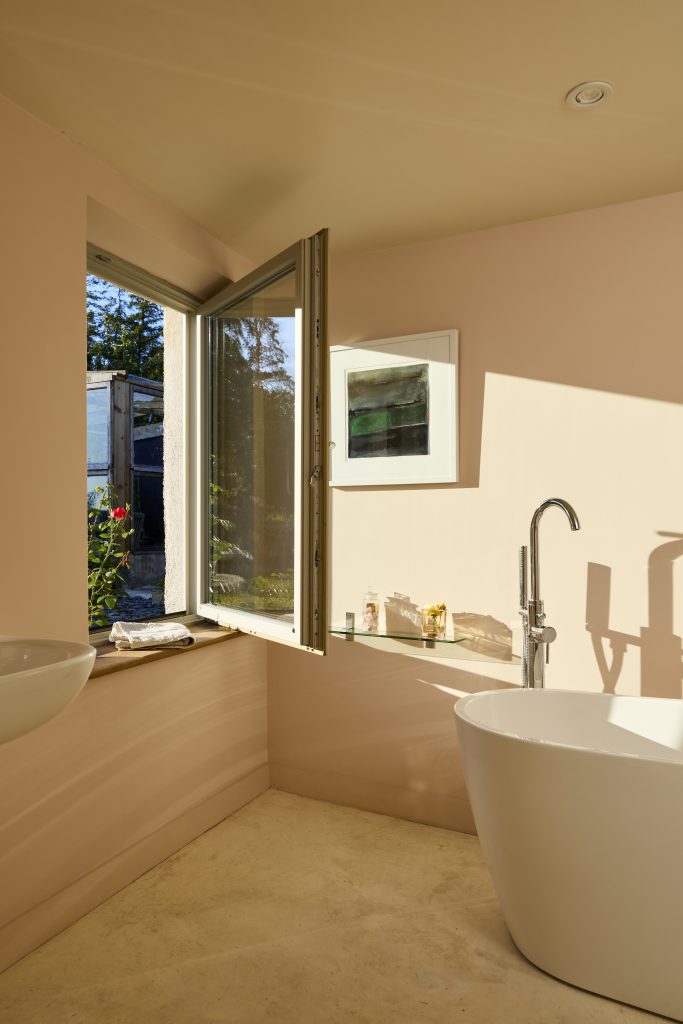
Elsewhere in the house, the atmosphere remains calm and tactile, with stone walls, lime finishes and timber elements providing texture. ‘My style is earthy,’ Patti explains. ‘When the building already has that much texture you don’t want to compete with it.’ The bathroom takes advantage of natural light rather than elaborate fittings. ‘The bathtub is positioned so you see the afternoon sun and the garden. It’s a very simple way of creating luxury.’ Even the WC reflects the building’s character. ‘When you sit there you can see the exposed stone wall of the thatched cottage. Those little recesses the builder created are lovely details.’ One of Patti’s favourite spaces is the tall room she now uses as an office. ‘It’s a high ceiling space and when the big window lets the sun pour in it feels incredibly uplifting and inspiring.’ The final stage of the renovation was the addition of a carefully designed extension that complements the original buildings.
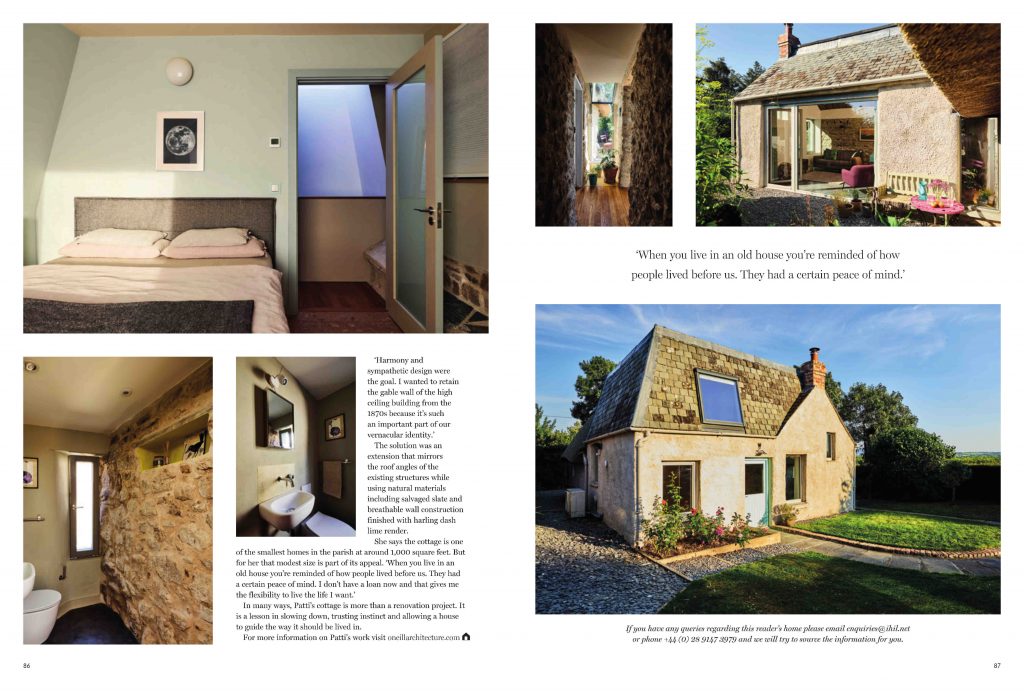
‘Harmony and sympathetic design were the goal. I wanted to retain the gable wall of the high ceiling building from the 1870s because it’s such an important part of our vernacular identity.’
The solution was an extension that mirrors the roof angles of the existing structures while using natural materials including salvaged slate and breathable wall construction finished with harling dash lime render. She says the cottage is one of the smallest homes in the parish at around 1,000 square feet. But for her that modest size is part of its appeal. ‘When you live in an old house you’re reminded of how people lived before us. They had a certain peace of mind. I don’t have a loan now and that gives me the flexibility to live the life I want.’ In many ways, Patti’s cottage is more than a renovation project. It is a lesson in slowing down, trusting instinct and allowing a house to guide the way it should be lived in.




 Although the photo is not that flattering it depicts my sentiment perfectly regarding modern synthetic building materials!